
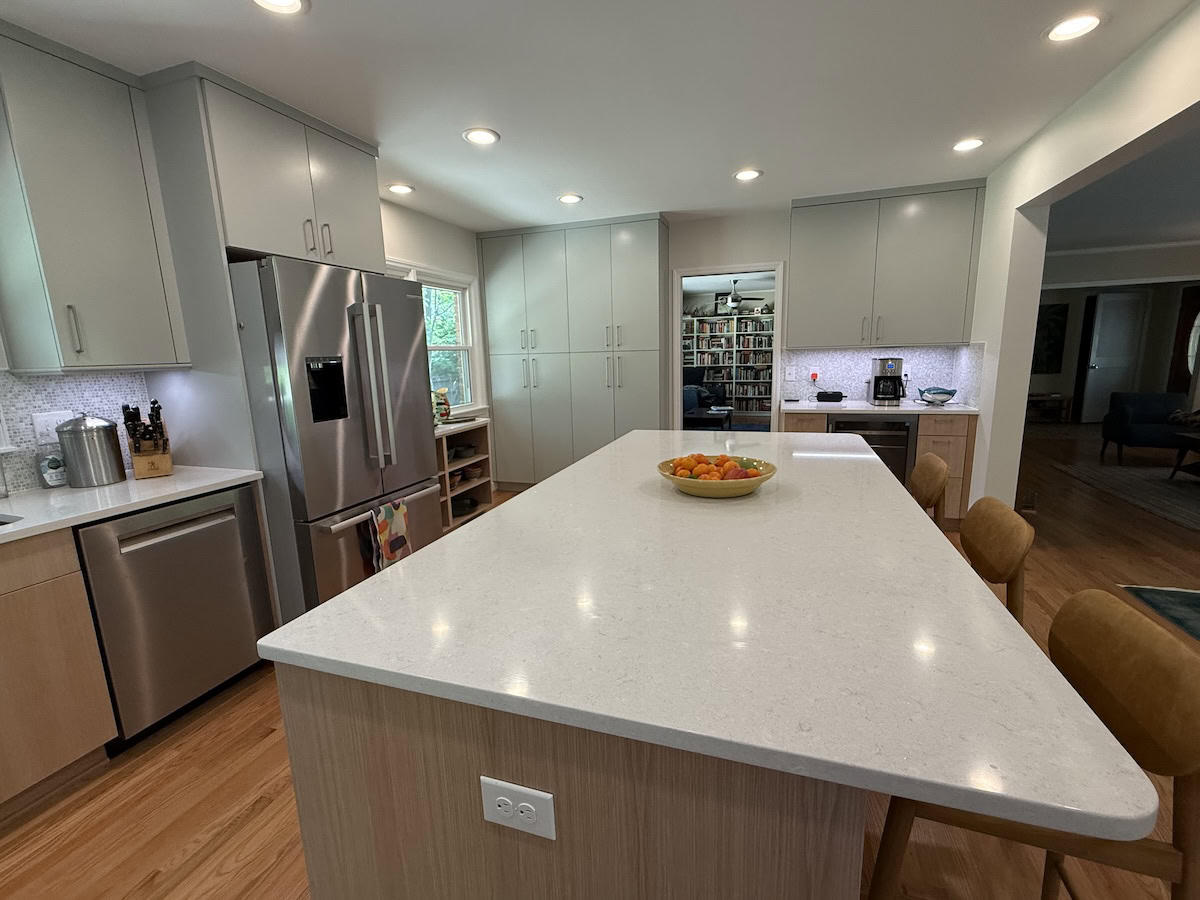
The crew has not arrived yet, but the work has already started. What you do in the weeks before demolition has a direct effect on how the whole project runs. Good preparation keeps your belongings safe, holds the schedule together, and cuts down on the surprises that push budgets and stress in the wrong direction.
At Prince & Sons, we do not hand you a start date and disappear. We walk through this preparation with every client, because a renovation goes more smoothly when the homeowner and the build team are ready on the same day. Here is how to get your home, and yourself, set for the work ahead.
The single biggest cause of delays and cost overruns is a decision that changes after the work begins. Switching a countertop, moving a wall, or rethinking a layout mid-project sends ripples through the schedule, the budget, and the order in which trades come through.
This is why we front-load the design. Before anyone picks up a tool, our in-house design team builds your space in 3D using CAD and design software, so you can see the finished room instead of imagining it. You confirm cabinets, countertops, fixtures, flooring, and finishes while they are still easy to change. By the time demolition starts, the plan is set, and the materials are ordered.
Walk your project with this in mind. If anything still feels uncertain, raise it now as it is much easier to make these changes before a project begins as opposed to mid way through the project.
Empty the room being renovated. Take down wall art and mirrors, and pack up anything breakable or valuable well before the start date. Dust travels further than most people expect, so clear items from open shelving in the adjacent rooms too.
For a kitchen, that means clearing counters, emptying cabinets, and boxing up small appliances, dishes, and pantry goods. Label the boxes by room so unpacking later is simple.
You will be living around the work, so plan for it. A kitchen remodel means setting up a temporary kitchen somewhere else in the house. A microwave, a coffee maker, a few dishes, and a folding table in the dining room or garage will carry you through. Keep the refrigerator accessible if it is staying in service.
If the project takes your only full bathroom out of commission, sort out the backup before day one. We talk through these realities during planning to ensure everyone is on the same page as far as any disruptions during the renovaiton.
A renovation is contained to one area, but the crew has to get there. Before work begins, we set up dust barriers, lay floor protection along the paths in and out, and agree on the route the team uses each day. You should know what we handle and what stays with you, so nothing falls through the cracks on the first morning.
This is also where the way a company works shows up. Whether it is our own carpenters or the trusted subcontractors we have worked with for years, everyone who comes through your home is held to the same standard, and we treat the parts of the house we are not renovating with the same care as the parts we are.
Open doors, unfamiliar voices, power tools, and a stream of people in and out are stressful for animals and risky for small children. Decide ahead of time where pets will stay during work hours, whether that is a closed room far from the action, a daycare, or a few days with family. Cats in particular will look for any open door, and demolition days bring a lot of them.
Tell us about your animals and your routine. Knowing that a dog is nervous or that nap time is at one o’clock helps the crew work around your household rather than through it.
Small details cause the biggest day-one friction. Settle these before the start date:
A renovation runs on clear communication, and that works best when it is set up before the project starts rather than figured out halfway through. On our projects, we’ll provide a single point of contact, so questions and updates have a clear path rather than getting lost between trades.
Decide together how you want to stay in the loop, how often you expect updates, and how you will handle the choices that always come up once walls are open. When everyone knows who to call and what to expect, the project feels less like a disruption and more like a plan moving forward. This is a large part of keeping a remodel on schedule.
For a single-room project, moving furniture to another part of the house is usually enough. For a whole-home renovation or a large addition, decide early what gets relocated within the home and what is better off in temporary storage for the duration. Furniture that sits in a construction zone, even a covered one, tends to collect dust and the occasional scratch.
If you are not sure what needs to move, ask during planning. We have walked enough homeowners through this to know what tends to be in the way.
None of this is complicated, but it adds up. Homes that are ready for the crew on day one tend to run closer to schedule, stay cleaner, and feel less stressful from start to finish. An experienced general contractor handles much of this preparation alongside you rather than leaving it on your plate.
That is the standard we hold on every job. If you are planning a renovation in Durham, Chapel Hill, or Hillsborough and want a team that prepares as carefully as it builds, reach out for a consultation. We will walk you through every step, well before the first wall comes down.